“A meaningful house is not one that is finished. It is one that is being used well.”
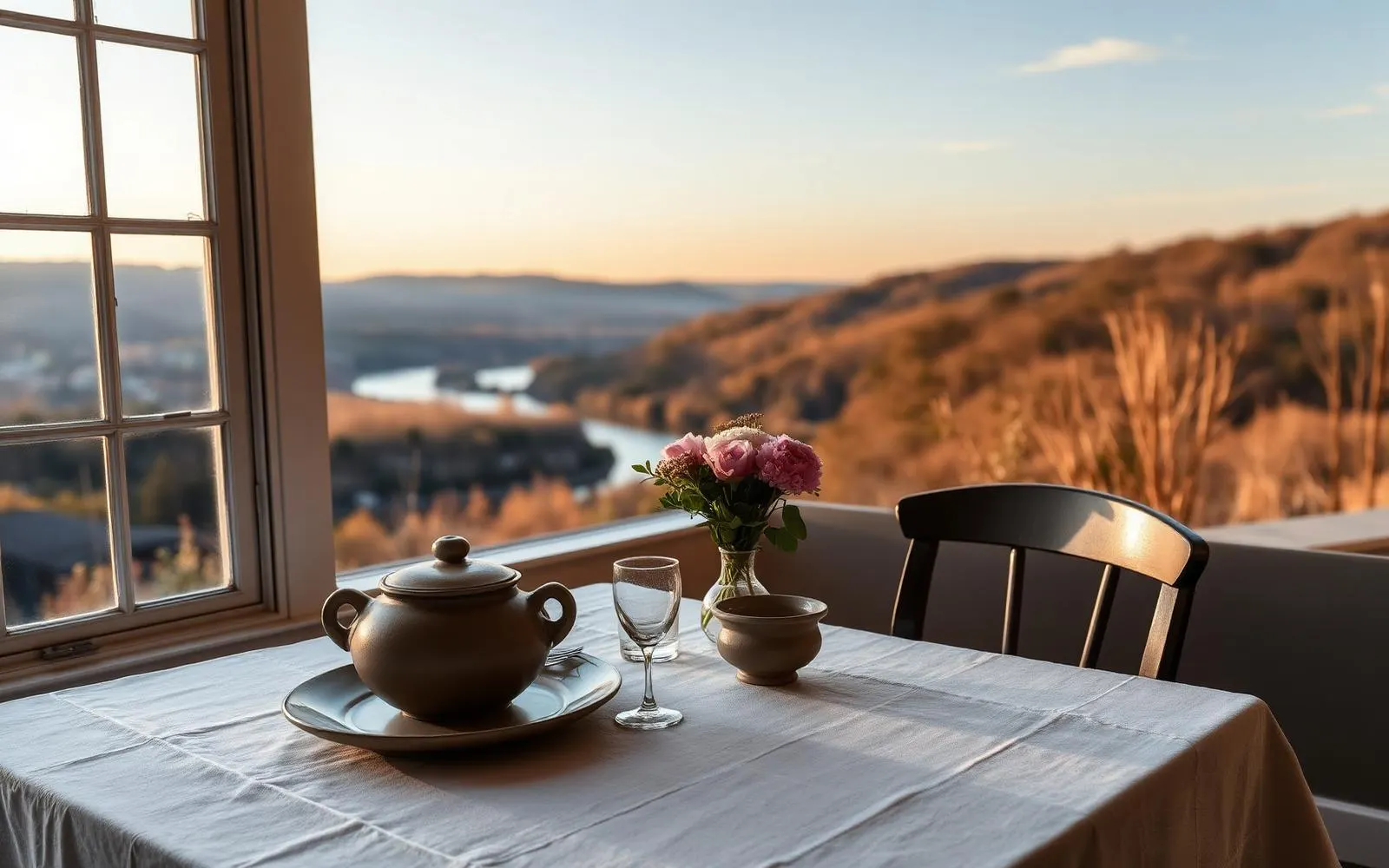
A table set for six on a Sunday in late February, in a house above the river, with the light going purple over the valley outside the window. The linen is wrinkled because it was washed rather than pressed. The stoneware does not match. There are flowers, if you can call them that, three stems of something cut from the yard in a jar. Nobody photographed it. Everyone stayed at the table for two hours after the food was gone.
I have been in a great many houses in this valley, at every price, and I have stopped being able to predict which ones will feel like that. It correlates with almost nothing you can put in a listing.
The Tuesday question
The most useful question I know to ask about a room, before it is built or bought or renovated, is what will happen in here on an ordinary Tuesday.
Not at Thanksgiving. Not when the family comes. Tuesday. Most of life is Tuesday, and rooms designed for the exception sit empty through the rule. This is how houses end up with a formal dining room used four times a year, a great room nobody sits in, and four people crowded around a kitchen island because it is the only place in nine hundred square feet of living space that anyone actually likes.
A house that answers the Tuesday question honestly tends to end up smaller, warmer and better arranged than the one people set out to build.
Materials that get better
There are two kinds of materials. Ones that only decline from the day they are installed, and ones that improve with use. A laminate surface is at its best on the first afternoon. Wood, stone, brass, wool, linen and leather all look better in year eight than in year one.
This is not an argument for expensive finishes everywhere. It is an argument for putting the good material where hands and feet actually go: the floor, the handrail, the counter you lean on, the door hardware you touch four thousand times a year. A brass handle that has gone soft in the middle from a decade of palms is the cheapest luxury in a house, and it cannot be bought new at any price.

Hospitality is architecture, not effort
People who host easily usually have a house that makes it easy, and the features are unglamorous. Somewhere to put a coat that is not a bed. A kitchen with a working edge, meaning a counter or table where two guests can stand and talk to the cook without being in the way. Enough chairs, not necessarily matching. Light that can be turned down.
Houses that discourage hospitality tend to fail at the entry and the kitchen edge specifically. If arriving is awkward and standing around is awkward, people stop coming, and then the house gets quiet, and nobody quite identifies why.
Hospitality is mostly a floor plan question. Warmth helps, but the coat hook does more.
A sense of place, which is not a style
Houses in this valley that feel right are almost always doing something with the region. Stone that came from near here. A porch oriented to the weather rather than the street. A roof pitch that has been solving Pennsylvania snow for two centuries. Windows placed where the light and the view actually are.
That is different from decorating in a regional theme. A house can be entirely contemporary and still be of this place, if it sits on the ground correctly and faces the right direction. And a house can have every farmhouse signal in the catalog and still feel imported, because nothing about it responds to where it is.
Let it accumulate
The strongest thing I can say about meaningful houses is that none of them arrived complete. They were furnished over years, with mistakes in them. There is a chair somebody's grandmother had. There is a rug bought in a hurry that turned out to be perfect. There is a wall that has been three colors.
Finishing a house in one transaction is possible and it produces a room that looks like a decision rather than a life. Waiting is not just cheaper. It is the mechanism by which a house comes to be about the people in it.
Which brings it back to the table on a Sunday in February. Nothing on it matched. Everything on it was used. That is what a house is for, and it is available at nearly any budget, and it is almost never the thing people are shopping for when they start.
What to take from this
- Ask what a room will be used for on an ordinary Tuesday before building it.
- Prefer materials that improve with wear over materials that only decline.
- Design for real hospitality, starting with the entry and the kitchen edge.
- Let a house accumulate rather than arrive complete.
Where to go next
The Journal is written for people thinking about homes, not just financing them. Articles are educational and reflect general observation about Pennsylvania housing, architecture, and daily life. Nothing here is an offer to lend, a commitment to a rate, or an appraisal of any particular property. Corie Adams, NMLS #1875205. Network Funding, LP, NMLS #2297. Equal Housing Opportunity.