“A roof is a decision someone made about weather, money, and how long they intended to stay.”
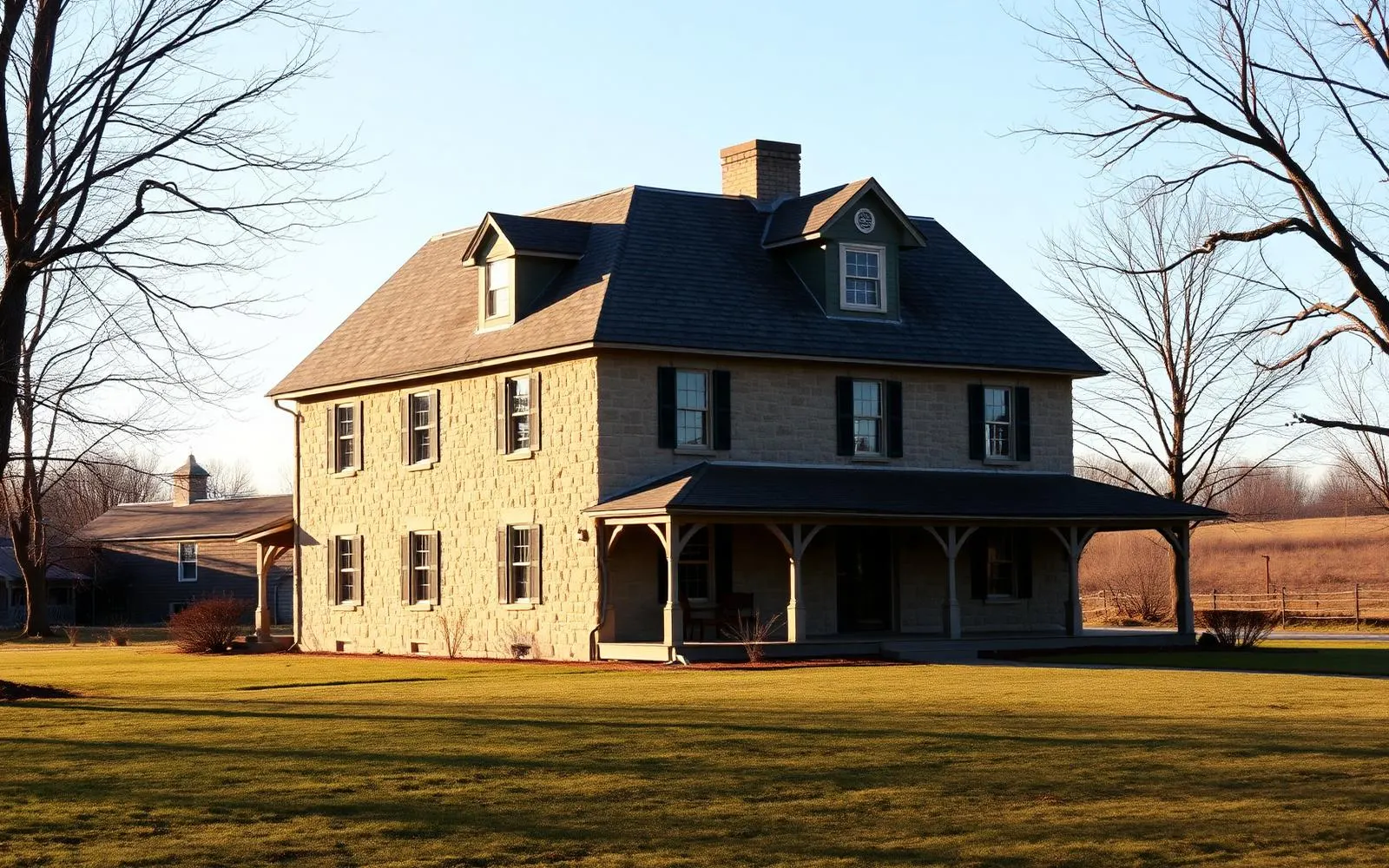
There is a stretch of road between Strasburg and Gap where the corn has been cut and the fields have gone the color of a paper bag, and if you drive it slowly on an October afternoon the houses begin to sort themselves. Not by size, and not by how well they have been kept. By the angle of their roofs. Steep ones on the old stone blocks near the road. Long low ones on the ranches that filled in the frontage after the war. Roofs with five or six planes folding into each other on the newest houses at the end of the lane, where the driveways are still dark and the trees are still small.
I have looked at a lot of houses in this county, most of them with someone standing next to me who is trying to decide whether to spend the next twenty years there. Almost everyone starts inside. They open cabinets. They stand in the primary bedroom and picture the bed against the far wall. That is a reasonable way to fall in love with a house. It is a poor way to understand one. The roof is where a house tells the truth about itself, and it does it from the curb, before you have taken your coat off.
The steep gable and the century behind it
On an early Pennsylvania farmhouse the pitch is often close to twelve on twelve, which reads to the eye as almost severe. There is nothing romantic in it. Roofs were covered in wood shingles, and a wood shingle roof survives only if water leaves it in a hurry. Snow slides. Rain runs. The steepness is a weather decision made by someone who had no other option.
What that decision produced, incidentally, is one of the loveliest rooms in Pennsylvania housing: the tall third floor under the ridge. Usually it was never quite finished. Usually there is a knee wall and a window at the gable end and floorboards that were laid in a single afternoon. Half the people I walk through those houses see storage. The other half stand there and go quiet, and I know before we get back downstairs which way they are leaning.
The barn taught the house
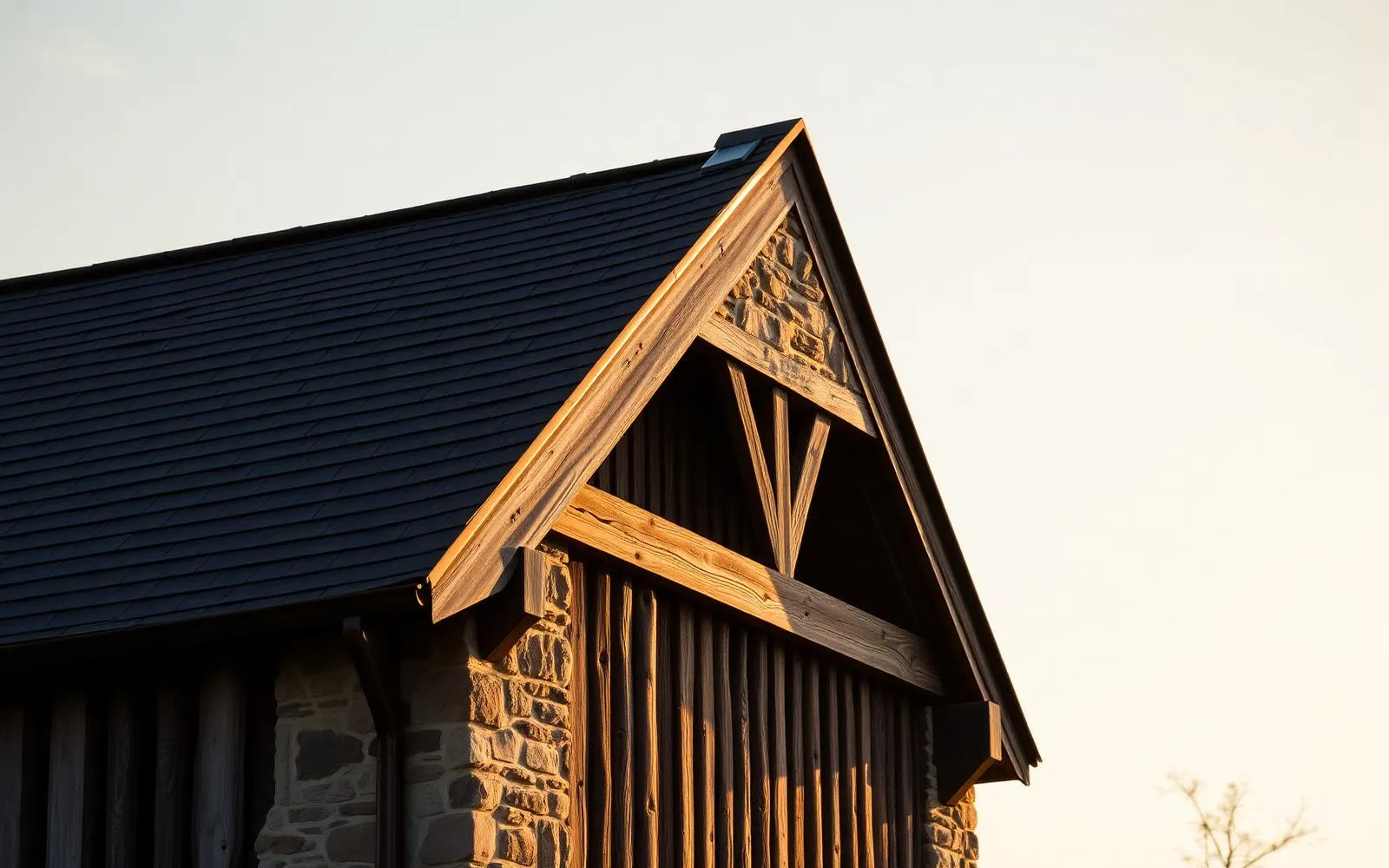
The most instructive roof in the county is not on a house at all. Drive past a bank barn in the last hour of light and look at what it is doing. It is built into a slope so a wagon can be driven onto the upper level while animals stand below at grade. The roof spans an enormous width with no interior wall carrying any of it, held instead by a timber truss that walks the load outward to the stone.
Every good house borrows something from a barn: honest structure, generous span, light coming from two directions.
You can feel when a modern great room has borrowed that logic and when it has only borrowed the height. The calm ones have a long unbroken ridge, structure you are allowed to see, and windows on two walls so the light crosses the room instead of glaring in from one side. The uneasy ones are simply tall. Same square footage, entirely different room.
What a complicated roof is trying to hide
A roof with six or seven planes almost always means the floor plan grew outward in bays and bump outs, each one adding a little square footage and a little curb appeal. It photographs beautifully. It also creates valleys, and valleys are where roofs eventually give up. Water concentrates there, ice sits there in February, and the flashing in a valley is the one detail on a roof that depends entirely on how careful somebody was on a Tuesday twenty years ago.
So when I am walking a resale with a busy roofline, I am not admiring it. I am counting. How old are the shingles. Are the valleys woven or metal lined. Is there any faint tea colored staining on a bedroom ceiling that someone painted over once and hoped about.
- Look down the ridge from the corner of the lot. A sag in the middle can mean an undersized or altered structure.
- Count the valleys. More valleys, more maintenance, forever.
- Follow the gutters to where they let go. Water pushed against a foundation becomes a basement problem within a few winters.
- Note the overhang. Generous eaves keep weather off the walls and windows, which is why old houses with deep eaves age so gracefully.
The part where money enters the room
Roof condition is one of the few things you can read from the sidewalk that will also show up later in an appraisal. On a straightforward purchase, a roof at the end of its life can turn into a repair requirement before closing, which arrives at the worst possible moment for everyone. On a renovation loan the same roof is simply part of the scope, underwritten on what the house will be worth once the work is done.
That distinction is not a technicality. It quietly decides which houses a buyer is willing to walk through at all. I have watched people cross a beautiful old place off a list because of a roof, when what they actually needed was a different kind of loan.
The last house I looked at on that road had a roof that needed replacing within five years and a third floor with a window facing west. The couple stood up there for a long time without saying anything. Then they went back down the narrow stair, out to the car, and sat in the driveway with the heat running, looking at the pitch of the roof against the sky the way you look at something you have already decided about.
What to take from this
- Pitch tells you roughly when the house was built and how the attic can be used.
- Valleys and gutter discharge points are where roofs and foundations actually fail.
- Roof condition can become a lender condition, so it belongs in the conversation before you write an offer.
- If the roof needs work, ask about renovation financing before you decide the house is out of reach.
Where to go next
The Journal is written for people thinking about homes, not just financing them. Articles are educational and reflect general observation about Pennsylvania housing, architecture, and daily life. Nothing here is an offer to lend, a commitment to a rate, or an appraisal of any particular property. Corie Adams, NMLS #1875205. Network Funding, LP, NMLS #2297. Equal Housing Opportunity.