“Heritage is a set of materials, not a set of signs. Use the materials and skip the signs.”
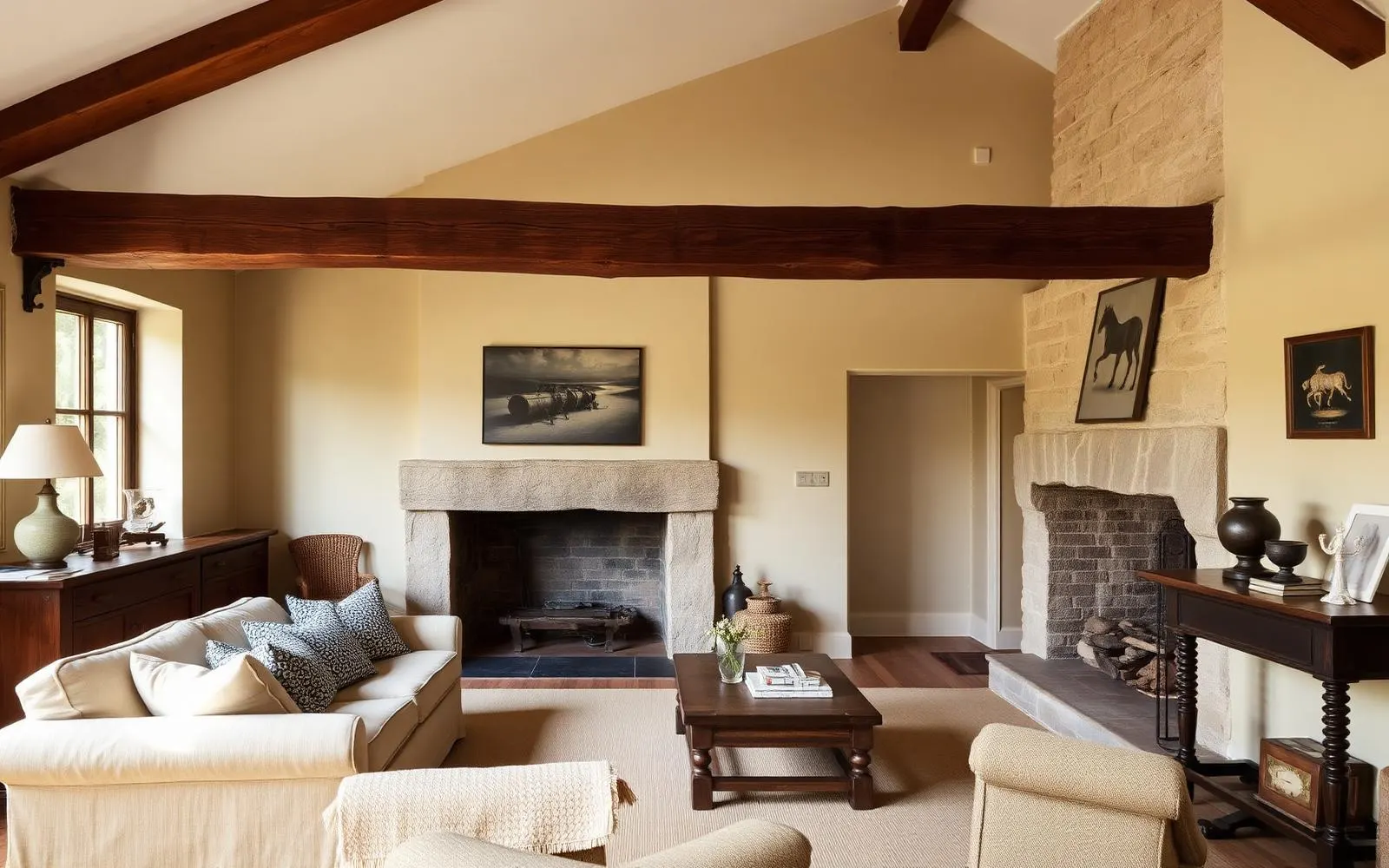
A farmhouse outside Kutztown, in February, in the room with the hearth. It is late afternoon and already going dark. There is an oak beam overhead that has gone almost black at the edges and stayed honey colored where somebody once planed it. A pair of iron fireplace tools that are clearly old and clearly still used, because the handles are worn smooth in one place and rusty everywhere else. Linen curtains, unlined, doing very little except softening the window. Four materials and a fire. That is the whole room, and it is one of the best rooms I have been in.
Berks County was a place that made things. Iron furnaces in the hills, forges, mills, tanneries, and around all of that a serious agricultural economy with the barns to prove it. That history is a material vocabulary, and it is a very good one to borrow from. The trouble is that most people borrow the signs instead of the materials.
Signs versus materials
The sign version of heritage is the one sold in stores: the reproduction sign that says FARM, the wire basket that has never held anything, the galvanized letters, the sliding barn door on a bathroom that never had a barn anywhere near it.
The material version is quieter and considerably older. Oak with visible grain. Iron with a hand forged irregularity to it. Plaster with some depth in the surface. Linen and wool. Redware and stoneware. Those materials were used here because they were made here, and they still look right in these houses for exactly that reason.
A room built from the materials does not need a single sign. A room built from signs needs more of them every year, because none of them ever settle.
Pick four or five and repeat them
The most reliable discipline in a room like this is a short material list, used over and over. Say oak, iron, plaster, linen and one ceramic. Then everything in the room is one of those five things, appearing in different sizes.
That repetition is what produces the calm. A room with fifteen materials is busy no matter how tasteful each one is. A room with five reads as intentional even when the individual pieces are humble, which most of the pieces in a Berks County house should be.
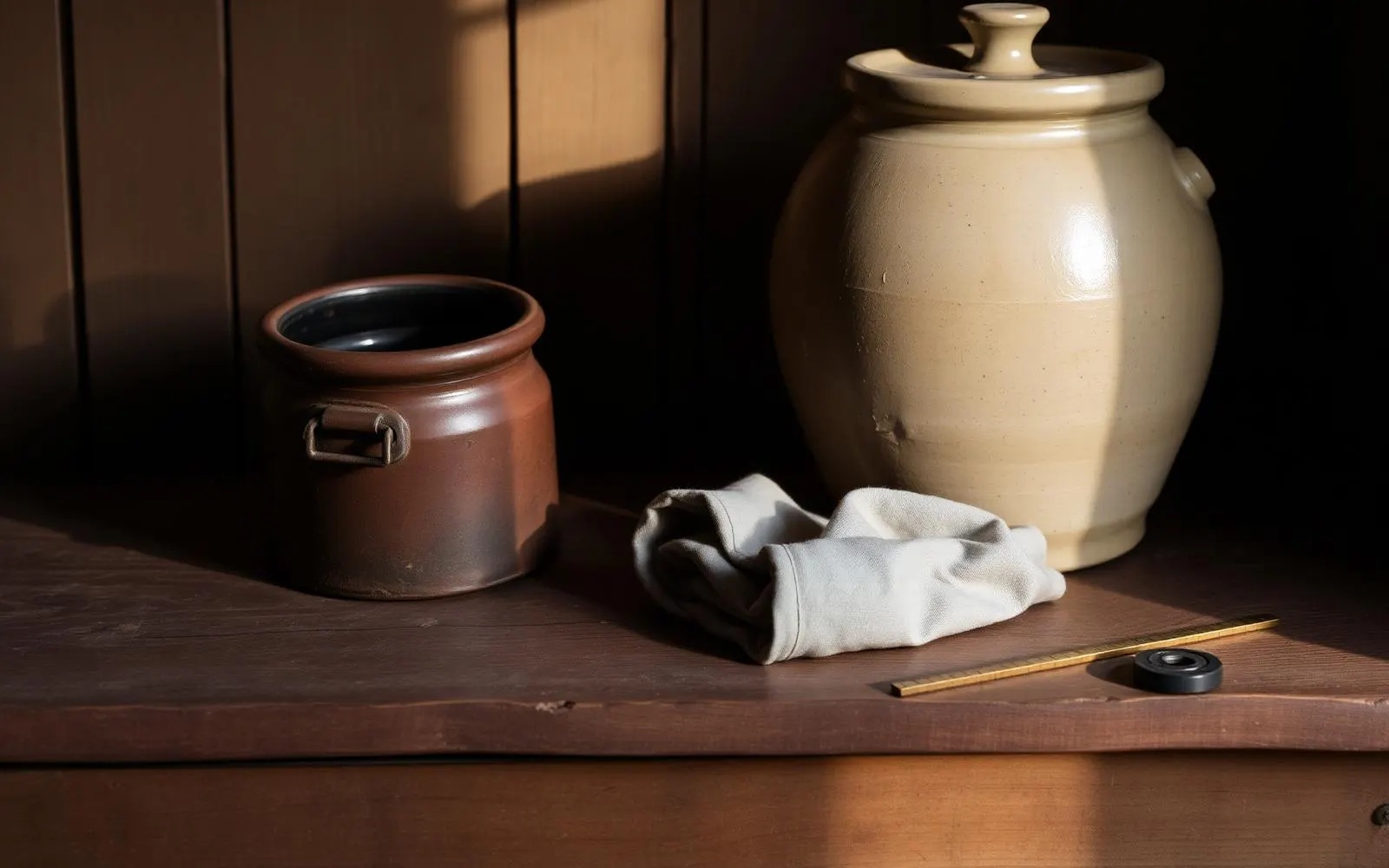
Buy old where wear shows, plain where it does not
This is the most useful sorting rule I know for furnishing a historic house on a real budget. Buy genuinely old for the things where age is visible and does the work: the hardware, the hearth tools, the small table, the chest, the crock on the windowsill. Those objects carry the room and reproductions never quite pass.
Buy plain and new for everything where nobody can tell and comfort matters: the sofa, the mattress, the dining chairs you sit in every night. A simple unadorned new piece in linen or wool disappears politely into an old room. A reproduction antique does not, because it is trying.
Texture instead of pattern
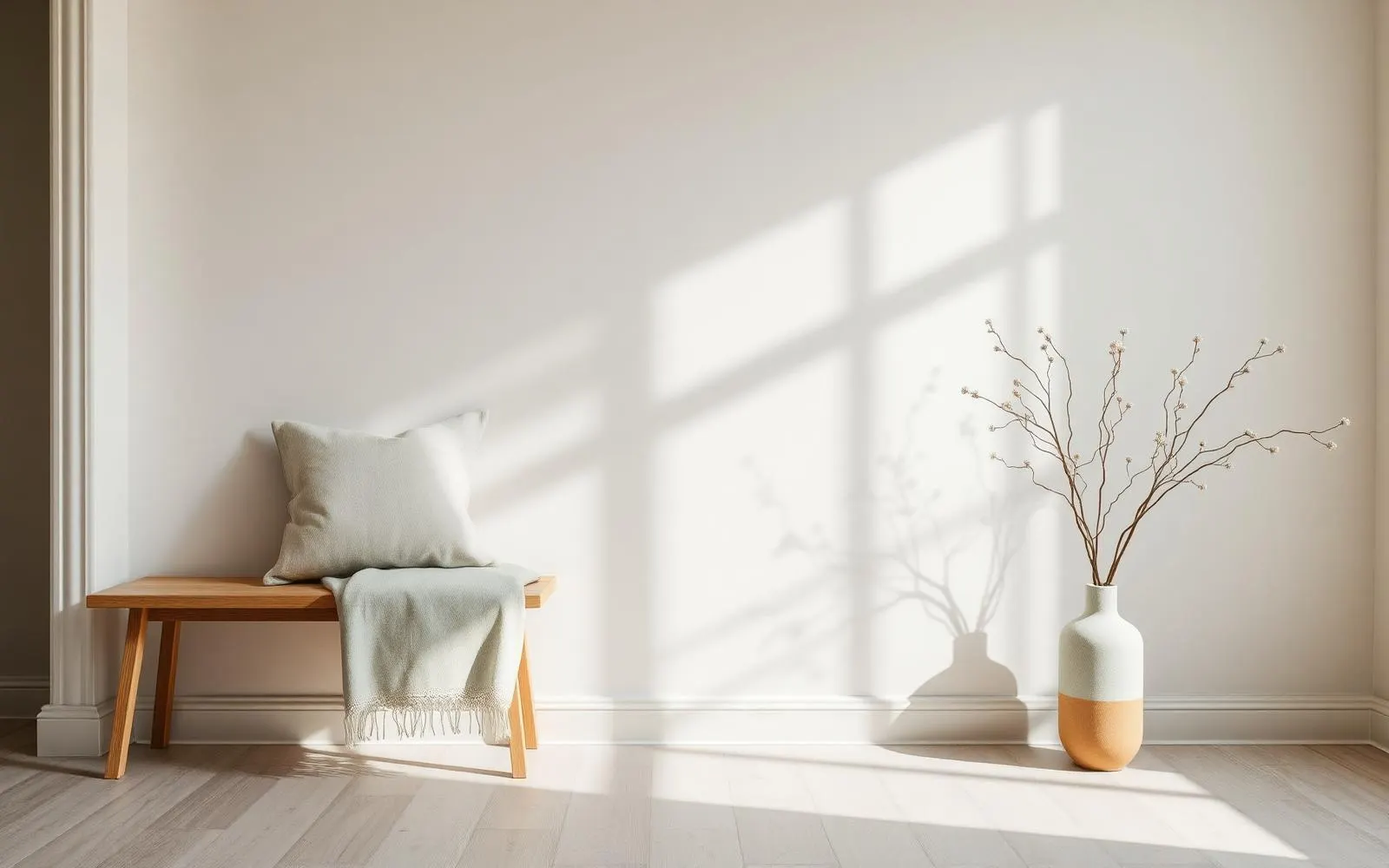
Berks interiors work in texture. Rough plaster against smooth ceramic. Coarse linen against worn wood. Iron against wool. Very little of it is patterned, and what pattern exists tends to be woven rather than printed.
There is a cheap test for this. Photograph the room and look at it in black and white. If it still has depth and interest with the color removed, the texture is doing the work and the room will hold up in February light. If it goes flat, the room was relying on color and pattern, and it will feel thin on the eleven grey days in a row this county specializes in.
Keep the collection in service
The difference between a house with old things in it and a house that feels like a museum gift shop is whether the objects have jobs. The redware bowl holds the eggs. The stoneware crock holds the wooden spoons. The iron hooks hold coats. The old table gets eaten on and takes the marks.
Once an object is displayed rather than used, it stops belonging to the household and starts belonging to a shelf. Berks was a working county. Its material culture was made to be handled, and it looks best when it still is.
One warm light, low
Plaster and dark wood absorb light, so a single ceiling fixture in a room like this produces glare underneath and gloom in the corners. Table lamps, a sconce near the hearth, a warm bulb, and the fire when there is one.
That is also the historically honest choice, since these rooms were lit low and warm for most of their existence. It is why the room outside Kutztown at five in the afternoon in February, with almost nothing in it, feels like somewhere you would rather stay than leave.
What to take from this
- Pick four or five materials from the local tradition and repeat them.
- Buy genuinely old where wear matters; buy plain and new where it does not.
- Use texture rather than pattern, and test the room in black and white.
- Keep objects in service; a collection with a job is not a display.
The Journal is written for people thinking about homes, not just financing them. Articles are educational and reflect general observation about Pennsylvania housing, architecture, and daily life. Nothing here is an offer to lend, a commitment to a rate, or an appraisal of any particular property. Corie Adams, NMLS #1875205. Network Funding, LP, NMLS #2297. Equal Housing Opportunity.