“Spend the first year watching where the water goes. Plant in the second.”
The first real rain after you buy a house is the most informative afternoon of the entire first year, and almost nobody goes outside for it. Put a coat on and do. Stand at the corner of the house during a hard summer downpour and watch. The water tells you everything the inspection could not: where the ground slopes, where the downspout dumps four feet from the foundation, where a low spot in the side yard turns into a pond that will still be there Wednesday, which part of the lawn is running rather than soaking.
Twenty minutes in the rain in July will save you more money than any planting decision you make in the following decade.
The case for doing almost nothing
New owners want to plant immediately. It is one of the purest impulses in homeownership and it is usually a mistake. A yard is a set of conditions you cannot see yet: where the frost sits latest in spring, which bed bakes at four in the afternoon, where the snow drifts, which corner the dog has decided is his.
A full year of watching costs nothing and prevents the standard sequence, which is buying four hundred dollars of plants in May, watching half of them fail by September, and concluding that you are bad at gardening when in fact you were simply planting sun perennials in a spot that gets three hours of light.
Two things worth doing in the first month
There are exactly two exceptions to the wait a year rule, and both of them are about protecting the house rather than decorating the yard.
First, extend the downspouts. Almost every house in this region has at least one that discharges too close to the foundation, and it is the single cheapest fix in homeownership. Underground extensions are better, above ground extensions are fine, and either is a fraction of the cost of the basement problem they prevent.
Second, get an arborist to look at any mature tree within falling distance of the house. Not a tree service that wants to remove it. An arborist who will tell you what is actually going on up there. Mature trees are the most valuable thing on most Pennsylvania properties and also the most expensive thing to be wrong about.
What the soil will probably tell you
If the house is new construction, the soil around it is likely compacted subsoil with a thin skin of topsoil and a lawn on top. Heavy equipment sat there for months. That is why the grass struggles in year two and why the first shrubs sulk.
The fix is organic matter and patience, not more fertilizer. Compost worked into beds, mulch left to break down, and a few years of leaving the leaves in the beds instead of bagging them will do more than any product on the shelf. In older properties the problem is usually the opposite: decades of undisturbed clay that drains slowly and holds water in winter.
Deer, honestly
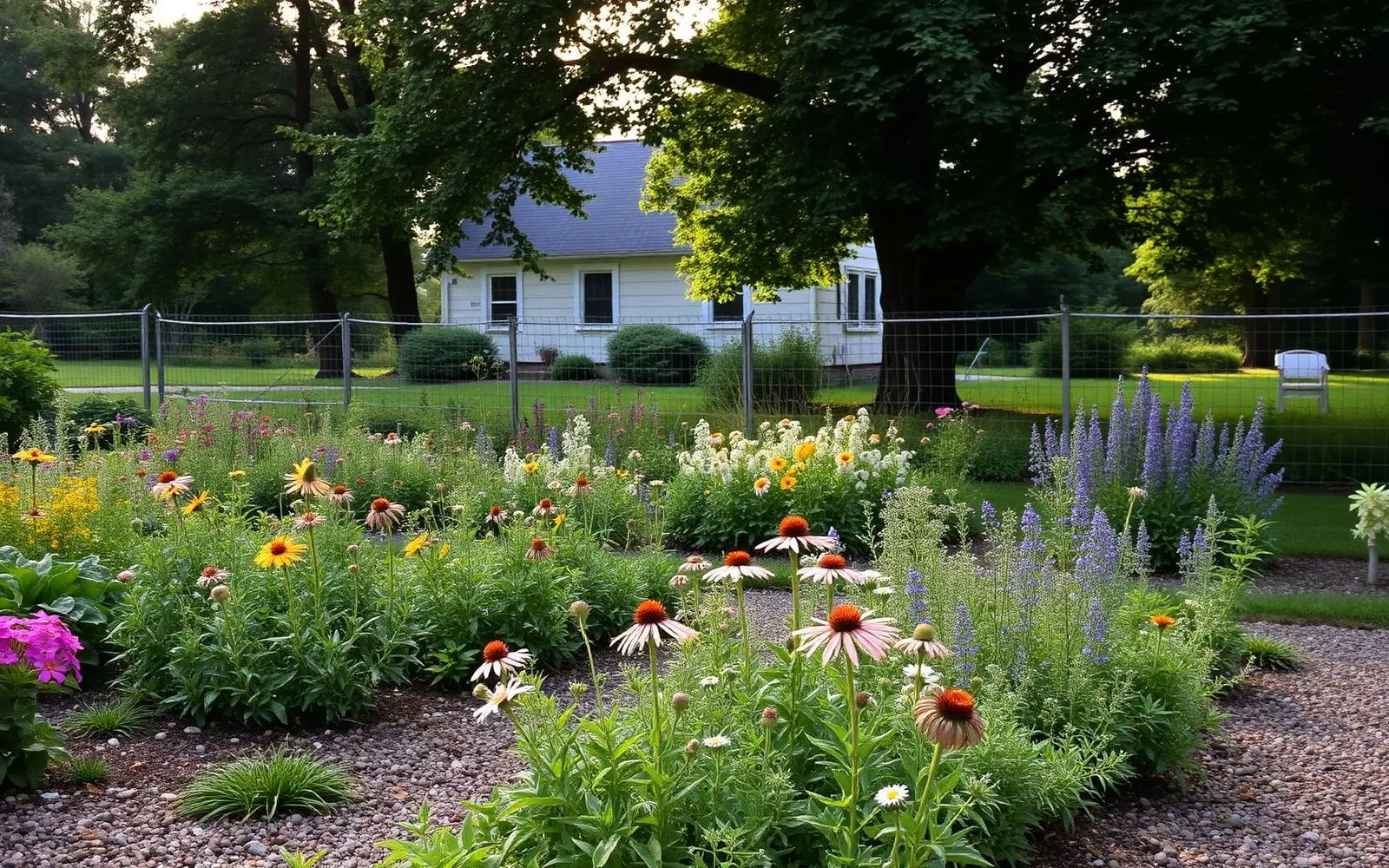
In most of southeastern Pennsylvania, deer are not an occasional visitor. They are a permanent condition of the site. Every experienced gardener here has arrived at the same conclusion: choose plants they tend to leave alone, or fence one area properly and garden inside it.
Sprays and repellents work for a while and then it rains. Defending the entire property is a losing campaign. A well fenced kitchen garden and a deer resistant palette everywhere else is the arrangement that people are still happy with in year five.
If the house is new, ask what the allowance covers
Builder landscape allowances vary enormously and are one of the more common surprises in the first year. Some cover establishment grading, seed and a handful of foundation shrubs. Some cover sod. Some cover very little beyond making the lot look finished on the day you move in.
Ask specifically, in writing, before settlement: what is graded, what is seeded or sodded, what plantings are included, and who is responsible if the lawn fails to establish. Landscaping is one of the largest post closing expenses new owners do not budget for, and it usually arrives in the same twelve months as window coverings and a fence.
The second spring
By then you know where the water goes, where the light lands in April versus August, which corner the wind hits, and what the deer are willing to negotiate. Now plant.
And plant in autumn where you can, because roots grow in warm soil while the air is cool, and a shrub put in the ground in October has a season of quiet establishment before it is asked to do anything. It is the least dramatic gardening advice available and it works better than anything else on this list.
What to take from this
- Watch the property through one full year before major planting.
- Extend downspouts in the first month. It protects the foundation cheaply.
- Get an arborist opinion on any mature tree near the house.
- Ask what a builder's landscape allowance actually covers.
The Journal is written for people thinking about homes, not just financing them. Articles are educational and reflect general observation about Pennsylvania housing, architecture, and daily life. Nothing here is an offer to lend, a commitment to a rate, or an appraisal of any particular property. Corie Adams, NMLS #1875205. Network Funding, LP, NMLS #2297. Equal Housing Opportunity.