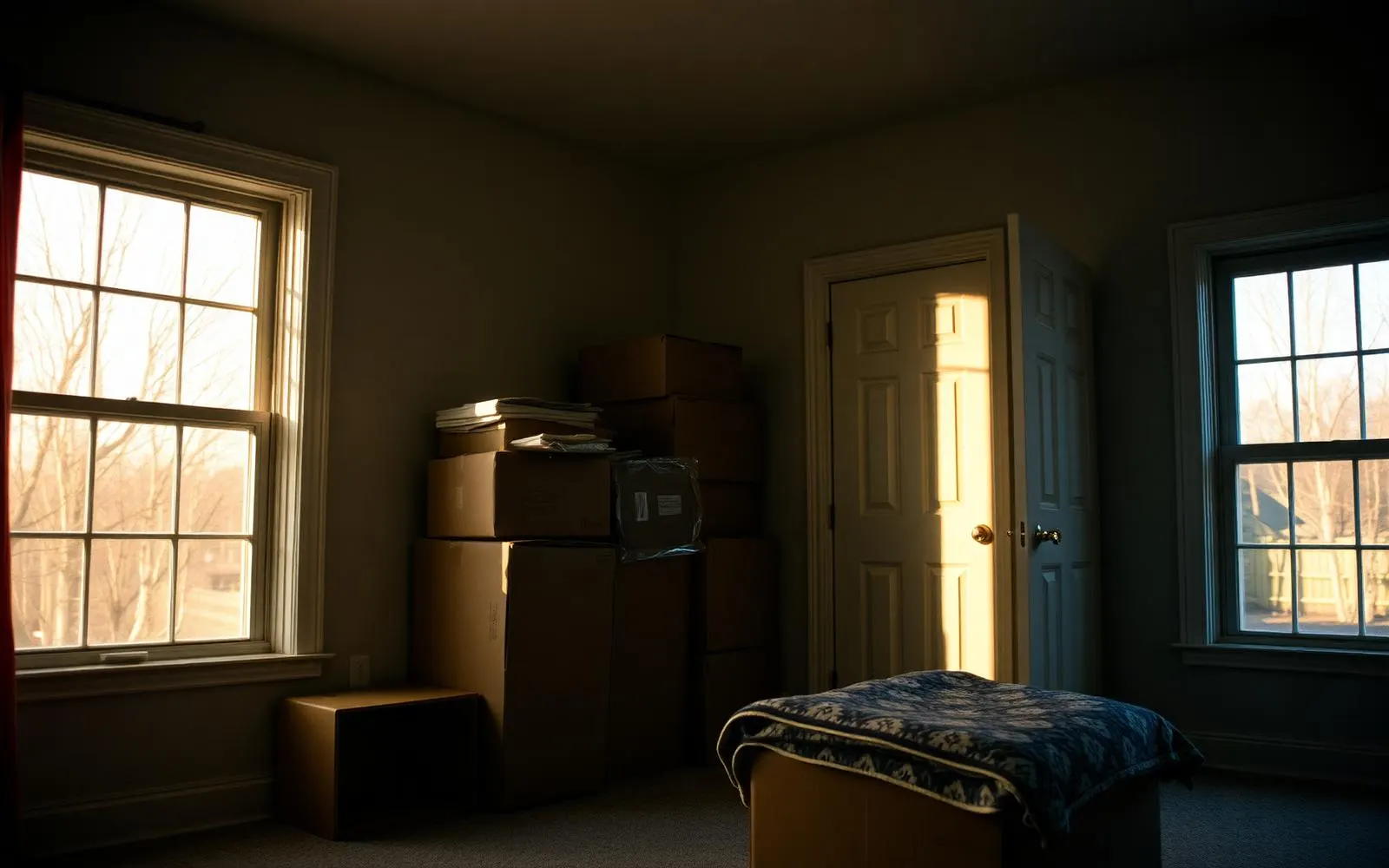
“An empty house sounds different. That is the part people remember.”
The living room of a split level outside Mechanicsburg, on a Thursday in March, at about eight in the evening. The furniture went out that afternoon. There are indentations in the carpet where the couch legs sat for eleven years, four of them, perfectly square. The overhead light is on because the lamps are packed. And when somebody walks across the room the sound is wrong, brighter and longer, because there is nothing left in there to absorb it.
That is the part people tell me about afterward. Not the closing. Not the truck. The three or four days at the end when the house is empty and still legally theirs, and it has stopped being home without yet being over.
The house gets strange before it gets gone
An emptied room shows you things. The paint behind where the bookcase was is a slightly different color. There is a pencil mark on a door frame, three heights, with dates. The closet floor has a small stain nobody ever identified. All of it was invisible for a decade and all of it turns up in the last week.
People react to this differently than they expect. Buyers who were entirely ready to leave, who had complained about the kitchen for years, find themselves sitting on the stairs. It is not regret, usually. It is just the recognition that a particular stretch of life has a physical container, and you are standing in it, and it is empty.
The practical advice, which is short
Do not close on the old house and move into the new one on the same day if there is any way to avoid it. It is the most common self inflicted wound in the whole process. Closings run late. Funding gets delayed by a wire that arrives at three. The movers are on the clock in a driveway you no longer own.
When the calendar makes overlap impossible, build in the smallest cushion you can. Even one night between them changes the emotional shape of the week, and it turns a logistics emergency into an inconvenience.
Pack one box that saves the first night
Everyone is told this and roughly half of people do it. The first night box: bedding, towels, toilet paper, phone chargers, soap, a couple of glasses, coffee and something to make it with, basic tools, the medications. It goes in the car, not the truck.
Then, in the new house, make the beds before anything else. Not the kitchen. The beds. At eleven at night, after a fourteen hour day, the difference between a made bed and an inflatable mattress and a search for the sheets is the difference between a good memory of the first night and a bad one.
The boring things worth ten minutes
- Photograph the back of the television and anything else with more than three cables.
- Take meter readings and a photo of them on the day you leave.
- Photograph the empty rooms, both for records and because you will want them in five years.
- Leave the manuals, the paint colors and the trash day in a note on the counter. Somebody did that for you once.
The sequencing is decided months earlier
Almost every miserable move I have watched was miserable because of a decision made long before moving week: how the sale of one house and the purchase of the other were sequenced. Whether there is a bridge, whether the offer is contingent, whether there is a rent back, whether the two closings are stacked on the same afternoon.
That is a conversation to have while you are still choosing a house, when the options are actually open. By March, when the couch is on the truck, the sequencing is simply what it is.
Then you leave
Most people do a last walk through the empty rooms and most people do not announce that they are doing it. They check a closet that has nothing in it. They stand in the kitchen for a second. Somebody turns off the last light, which nobody has needed to think about in eleven years.
And then the front door does the thing front doors do in an empty house, which is echo, and that is the sound they remember.
What to take from this
- Do not close and move on the same day.
- Pack one first night box and set up the bedroom first.
- Photograph cabling and take meter readings.
- Plan buy and sell sequencing months ahead, not during the move.
Where to go next
The Journal is written for people thinking about homes, not just financing them. Articles are educational and reflect general observation about Pennsylvania housing, architecture, and daily life. Nothing here is an offer to lend, a commitment to a rate, or an appraisal of any particular property. Corie Adams, NMLS #1875205. Network Funding, LP, NMLS #2297. Equal Housing Opportunity.