“The best kitchens are not the largest. They are the ones where two people can work without negotiating.”
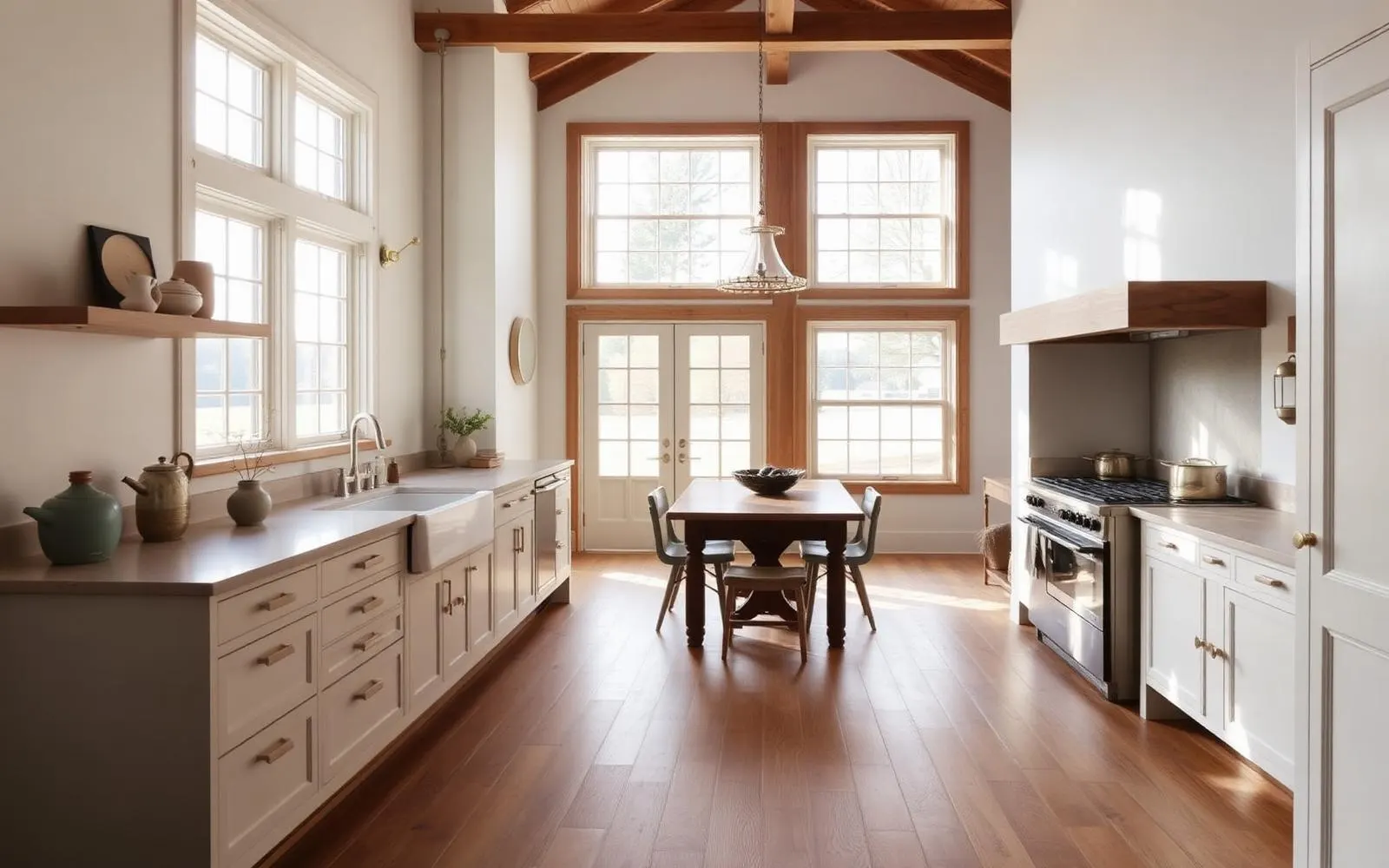
It is the last week of August in northern Lancaster County, a little after seven, and the kitchen is doing the thing that made me remember it. The sun has dropped far enough west to come through the tall windows at the end of the room and lie flat across the floorboards, all the way to the doorway. Somebody is at the sink. Somebody else is at the table with a laptop and a bowl of tomatoes that came in from the garden an hour ago and have not been dealt with yet. Nobody has turned on a light.
The room is not large. I have been in kitchens twice the size that felt like hallways with appliances in them. What this one has is four decisions, made early, by somebody who was paying attention.
One. Light from two directions
A room with windows on a single wall has a bright side and a dim side, and people gather on the bright side whether or not they notice they are doing it. Windows on two walls fill in the middle. Here the east glass takes breakfast and the south glass carries everything after ten, which is why the overhead fixture stays off until it is genuinely dark.
This costs nothing at the drawing stage. It costs a great deal afterward, which is the cruelty of it.
Two. A working surface with nothing on it
There is a run of counter, about six feet, that holds nothing. No canister, no mixer, no basket of things nobody has put away. That empty stretch is the reason the room feels calm even when the rest of it is covered in tomatoes. One clear surface gives every other surface permission to be busy.
Three. Materials that improve
Soapstone takes a mark and then, over a season, forgets it. Oak darkens. Unlacquered brass goes dull and then goes warm. These are the choices of somebody who expected the room to be used hard and did not want to spend the next twenty years protecting it from her own family.
Choose surfaces that get better with damage, and the house stops being something you have to defend.
Four. A table, not an island
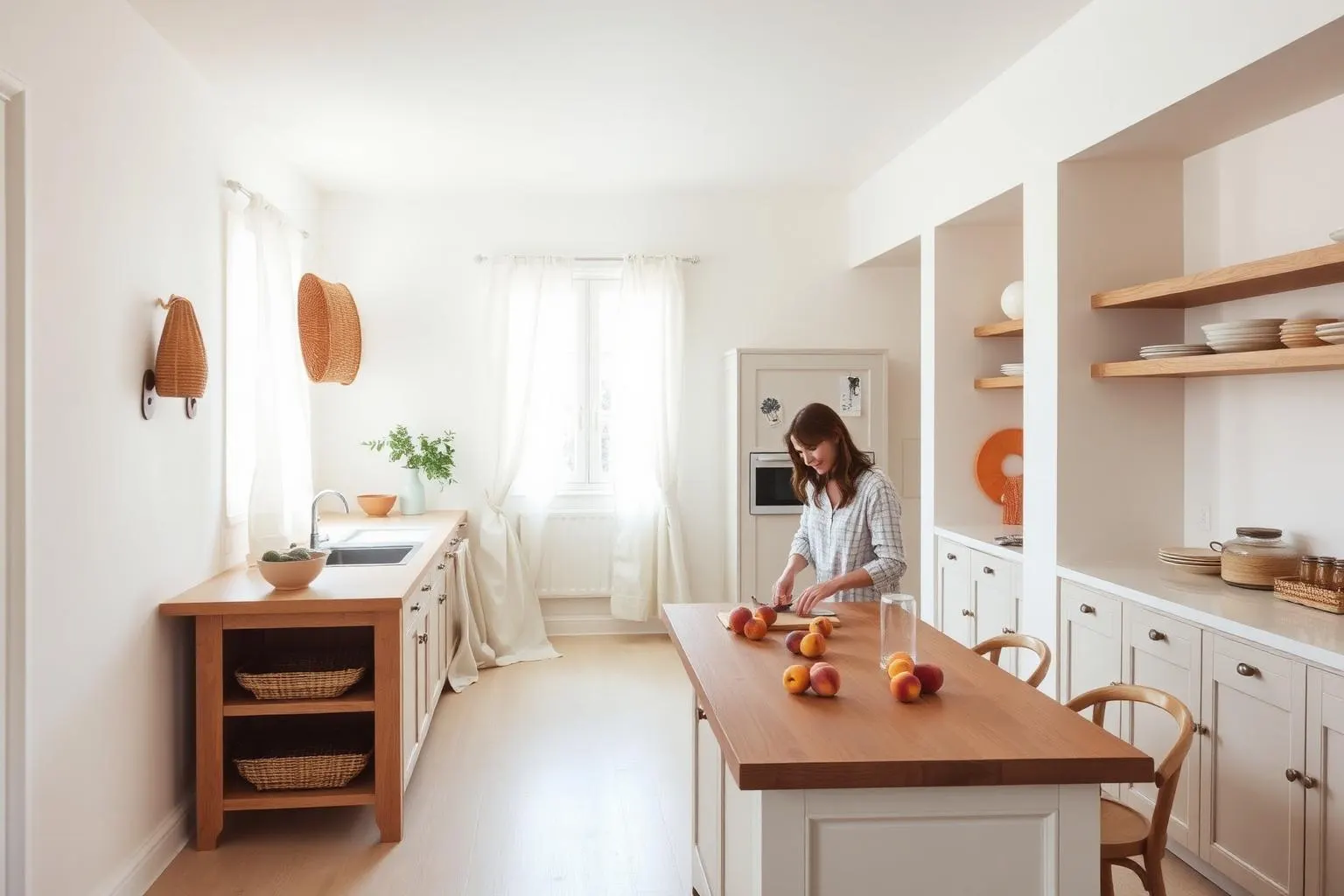
An island puts a barrier between the cook and everyone else and then seats them facing the cook's back. A table takes homework at four, mail at five, dinner at seven, and a pile of tomatoes at any hour. In old Pennsylvania houses the table was the kitchen, and the reason it keeps working is that it never assigned anybody a role.
The budget underneath
None of this is extravagant. Window placement is free while it is still on paper. Ceiling height follows the roof you were framing anyway. The soapstone costs more than laminate and considerably less than another hundred square feet of house, which is what most people buy instead.
By eight the light is gone from the floor and someone finally reaches for the switch. The tomatoes are still on the table. They will get dealt with tomorrow, in the east light, at the same table, which is more or less what the room was built to allow.
What to take from this
- Windows on two walls do more for a room than square footage.
- Leave one long counter run permanently empty.
- Prefer materials that patina over materials that need protecting.
- Set your selections budget before the design appointment, not during it.
Where to go next
The Journal is written for people thinking about homes, not just financing them. Articles are educational and reflect general observation about Pennsylvania housing, architecture, and daily life. Nothing here is an offer to lend, a commitment to a rate, or an appraisal of any particular property. Corie Adams, NMLS #1875205. Network Funding, LP, NMLS #2297. Equal Housing Opportunity.