“Stone gives a house its gravity. Everything you add afterward should be lighter than the stone.”
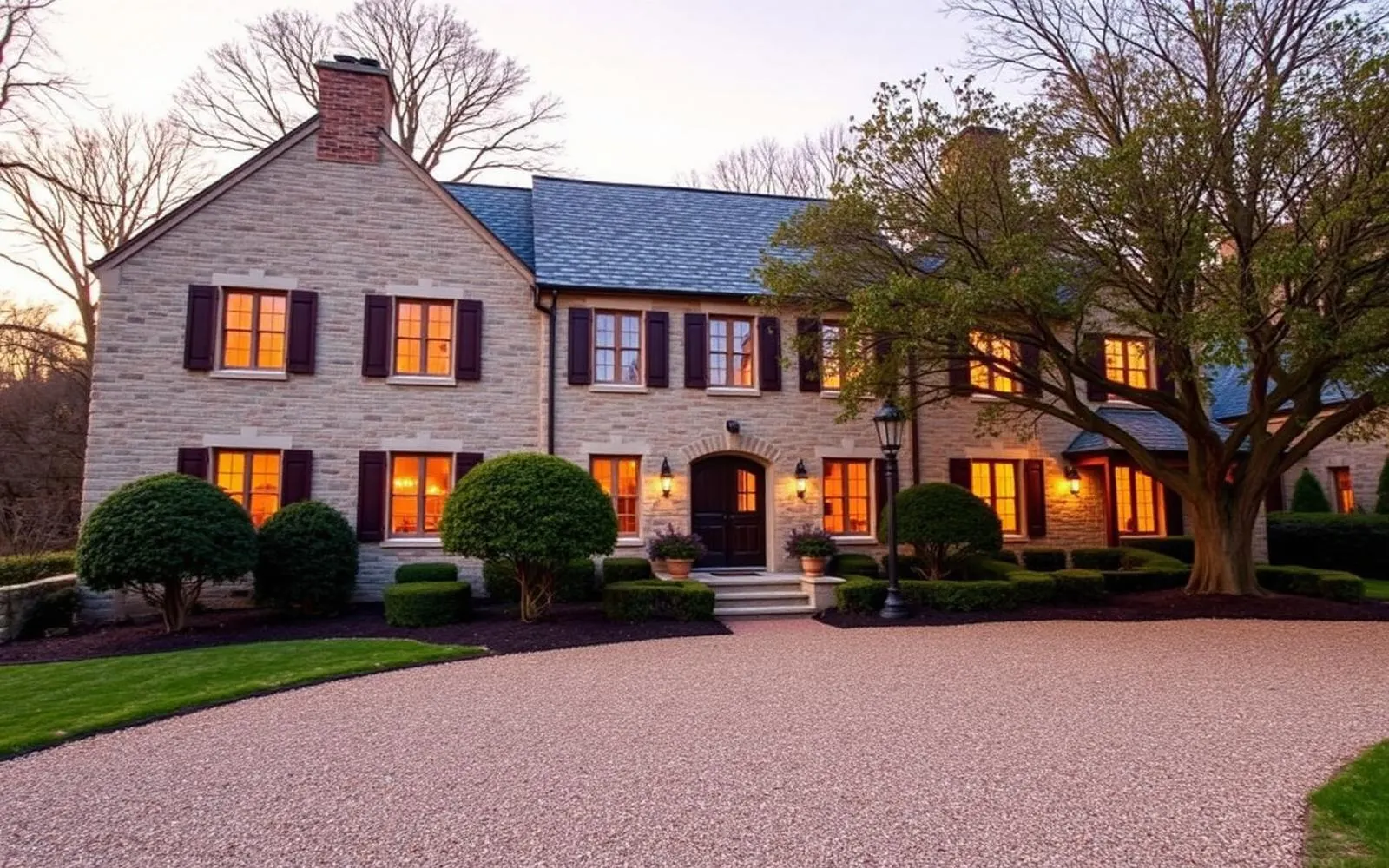
In April, on the back roads above Doylestown, the trees have just enough leaf to be green without hiding anything, and the stone houses come out from behind the hedgerows one at a time. You slow down without deciding to. Part of it is age. Most of it is color. The local stone is not one color at all, and the walls hold grey and buff and rust and something close to black within the same elevation, so that the whole face of the house changes as the sun moves across it.
These houses have been photographed and admired for a century, which has produced a specific hazard. It is very easy to buy one and then decorate it into a costume. The ones that stay beautiful avoid that by consistently doing less.
Let the walls be the loudest thing
A stone exterior carries an enormous amount of visual texture on its own. Set anything busy against it, elaborate shutters, ornate lanterns, foundation plantings in five colors, and the eye simply stops registering the wall. The most satisfying of these houses tend to have very plain trim in one quiet color and a short list of plants at the base.
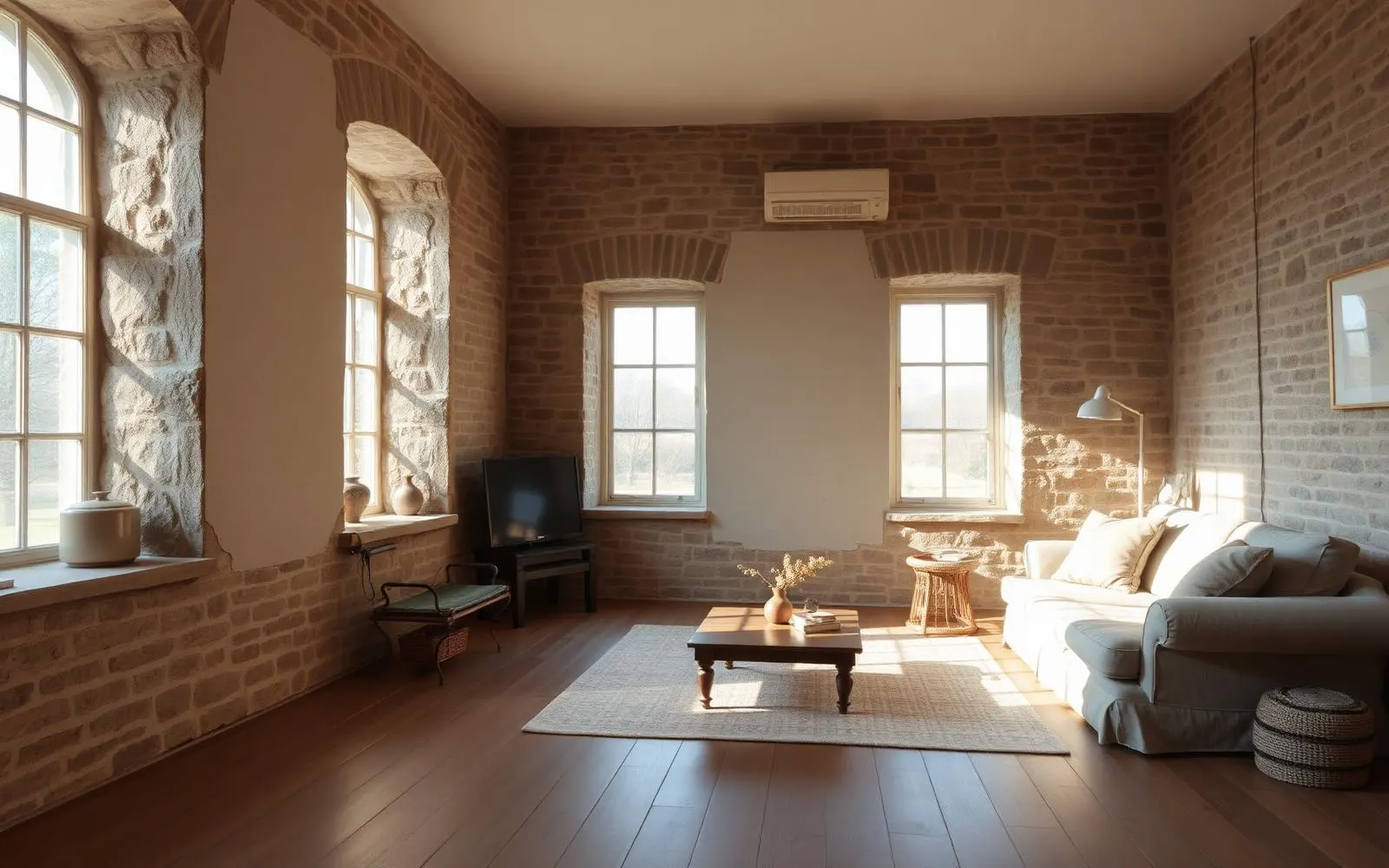
Inside, the same rule. If a room has an exposed chimney breast or a wall of original masonry, that surface is the pattern in the room and no other pattern is needed. Plain plaster elsewhere, a solid or nearly solid rug, furniture in undecorated fabric. It reads as generous rather than spare, because the stone has already done the work.
Deep openings are the best feature you own
A thick wall turns a window into a small architectural event. There is a reveal, a seat depth, a change in the quality of light as the sun crosses the splay. Paint those reveals a warm, pale white, leave them nearly uncovered, and every window becomes a lantern from about four in the afternoon onward.
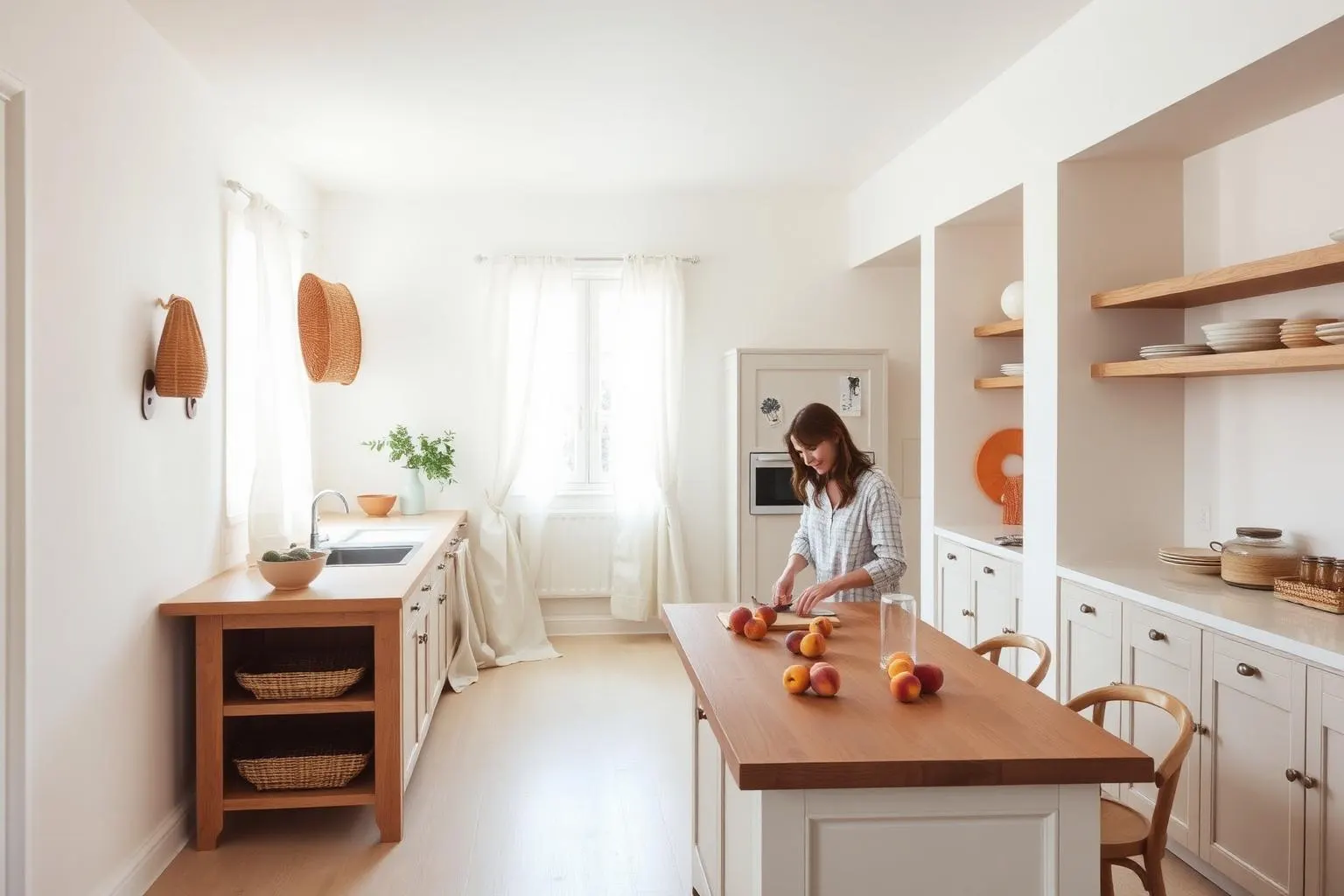
Heavy stacked drapery fights this. If you need privacy, an interior shutter or a shade mounted inside the reveal keeps the depth legible. Hanging curtains outside the opening, on a rod across the face of the wall, flattens two feet of masonry down to the thickness of a curtain rod, which is a strange thing to pay for.
Wood, and the argument for fewer species
Old houses accumulate wood the way a family accumulates chairs. Original floors in one room, a later oak floor in another, a beam that was always exposed, a mantel somebody carried in from a different building in 1974. When every piece is a different tone, the room starts to look like a lumberyard sample board with sofas in it.
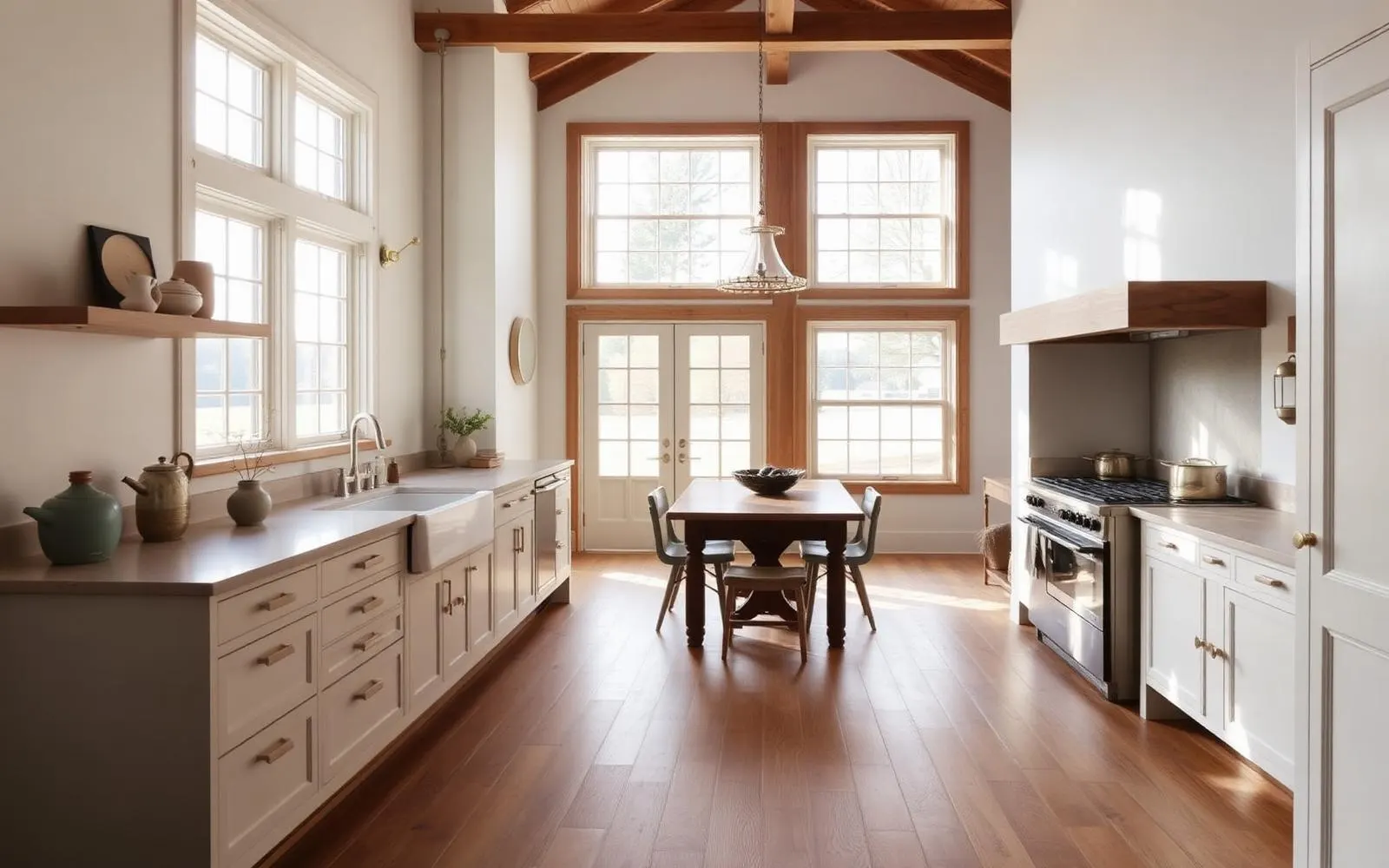
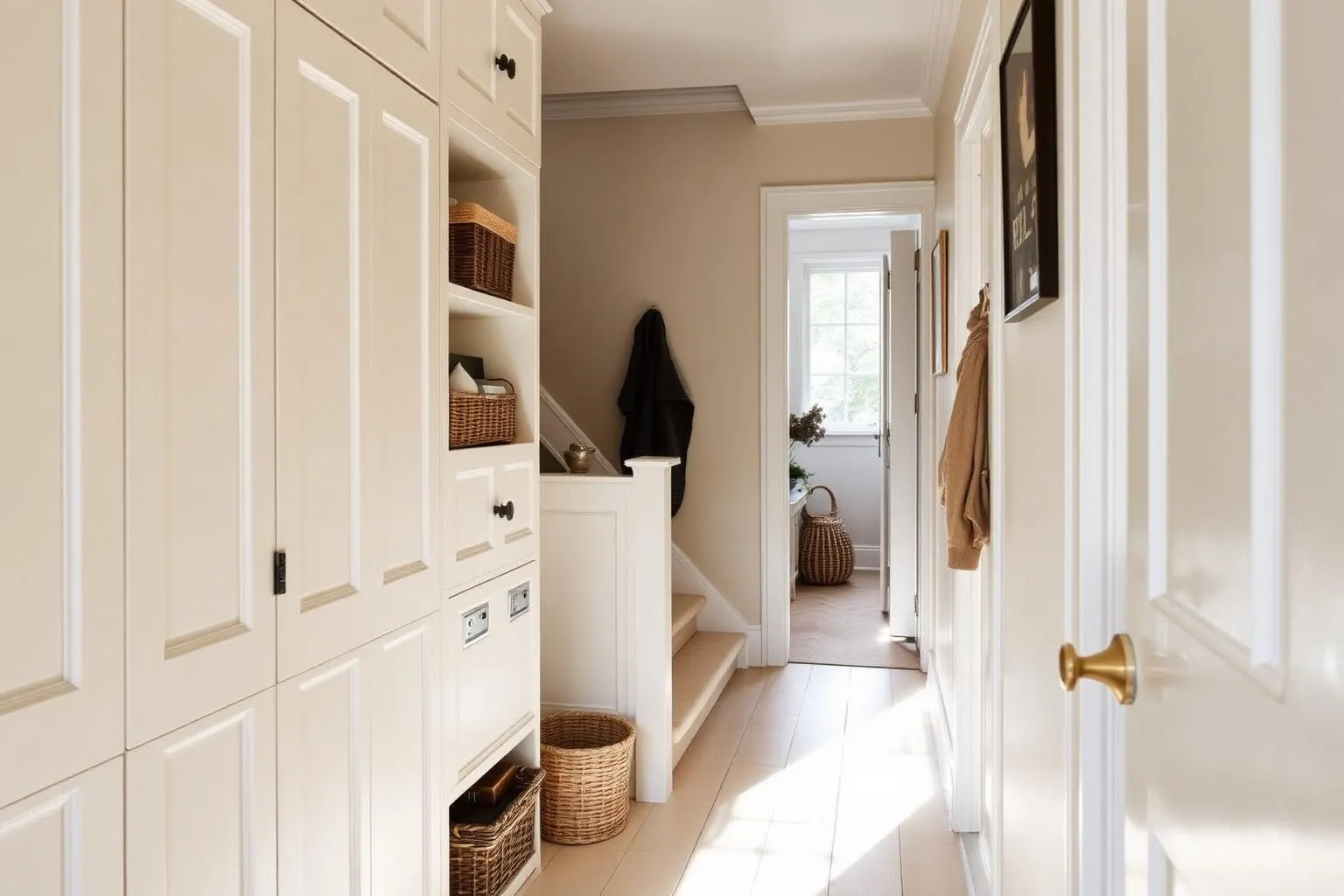
A useful discipline is two tones and no more. Choose the floor and the structural timber and let those be the woods. Cabinetry, doors, and built ins get painted. The room goes quiet, and the genuinely old pieces become legible as old, which is the entire reason you wanted them.
Two woods, one stone, one plaster. A historic house rarely needs a fifth material to feel rich.
Landscape as a frame, not a decoration
The strongest settings look almost accidental. A mown clearing, mature trees held at a distance, a low hedge or a stone edge near the walls, gravel where a car has to be. That restraint is deliberate and it is also practical. Plantings that climb the wall hide the base of the house and hold moisture against masonry that would rather stay dry.
When a garden is wanted, giving it a room of its own away from the building works better than wrapping the house in it. The house then stands as an object in a landscape, which is exactly what it was built to be.
Light: warm, low and layered
Stone and plaster both eat light. One bright ceiling fixture in a masonry room produces glare on the floor and gloom in the corners, which is the opposite of the effect anybody wants. Table lamps, sconces near eye level, and a low warm color temperature give these rooms back the depth they had when they were lit by fire and oil.
Outside, the same argument for very few fixtures mounted low. A stone facade under floodlight looks like a monument to itself. The same facade with two soft lights near the door looks like a house somebody is inside of, which is a better thing to come home to.
What to leave imperfect
There is a difference between repair and erasure. A cracked stone that is stable. A floorboard worn thin in a doorway. A door planed to fit its frame across two hundred years of humidity. Those marks are what make a house feel lived in rather than staged. Fix what is failing, stabilize what is moving, leave the rest alone.
The houses that hold up best are the ones where a visitor cannot tell what year the current owners arrived. Everything works, nothing looks new, and at seven in the evening in April the wall is still the most interesting thing on the property.
What to take from this
- Treat masonry as the pattern in the room and keep everything else plain.
- Mount window coverings inside the reveal so the wall's depth stays visible.
- Limit yourself to about two wood tones; paint the rest.
- Keep plantings and grade low against the walls, for looks and for moisture.
Where to go next
The Journal is written for people thinking about homes, not just financing them. Articles are educational and reflect general observation about Pennsylvania housing, architecture, and daily life. Nothing here is an offer to lend, a commitment to a rate, or an appraisal of any particular property. Corie Adams, NMLS #1875205. Network Funding, LP, NMLS #2297. Equal Housing Opportunity.